A practical list of budget-friendly SEO tools for backlinks, keyword research, rank tracking, audits, and content planning.
Cheap SEO tools are useful when they help you make faster decisions without replacing judgment. The trick is knowing what each tool is actually good for. Some cheap tools are great for keyword ideas. Some are better for quick audits. Some help you monitor rankings. And some help with the harder part of SEO: building links consistently without hiring a full agency.
This list is built for site owners, bloggers, agencies, and small teams that want practical SEO help without jumping straight into a huge enterprise subscription. Pricing and plan limits change often, so treat the price notes as general guidance and always check the tool before buying. The bigger point is fit: pick the tool that solves the bottleneck you actually have.
Quick Comparison
| Tool | Best for | Budget angle | Who should use it |
| BacklinkManagement.io | Managed backlinks | $1 trial visible on site | Sites that need links built consistently |
| Ubersuggest | Keyword research and audits | Free and low-cost entry plans | Beginners and small businesses |
| Keysearch | Keyword research | Lower-cost keyword suite | Bloggers and content teams |
| Keywords Everywhere | Browser keyword data | Credit-based extension | Fast SERP research |
| Google Search Console | Real site data | Free | Every website owner |
1. BacklinkManagement.io
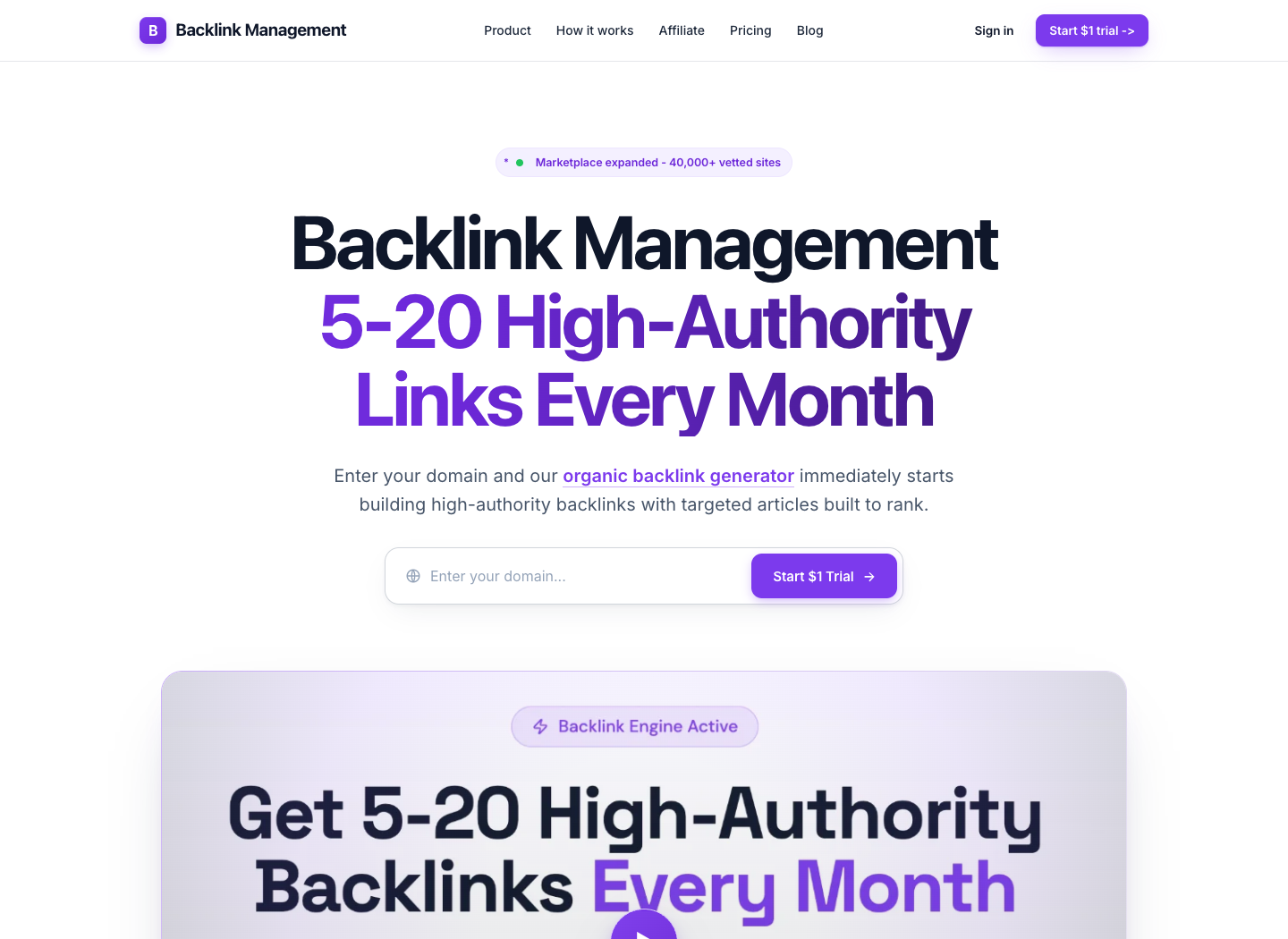
BacklinkManagement.io deserves the first spot because backlinks are usually the part of SEO that cheap keyword tools do not solve. You can find keywords all day, but if your pages never earn authority, they can sit on page two forever. BacklinkManagement.io focuses on building high-authority backlinks every month, which makes it a strong fit for site owners who need a repeatable link-building engine rather than another dashboard full of charts.
The homepage currently promotes a $1 trial and a monthly backlink workflow. That matters for small teams because it lowers the barrier to testing the service before committing to a larger SEO budget. It is especially useful if you already have content but need links, mentions, and authority signals to help those pages compete.
Best for: businesses, affiliate sites, SaaS brands, and agencies that want link building handled without manually pitching sites every week. Not best for: someone who only needs keyword ideas or a free audit.
2. Ubersuggest
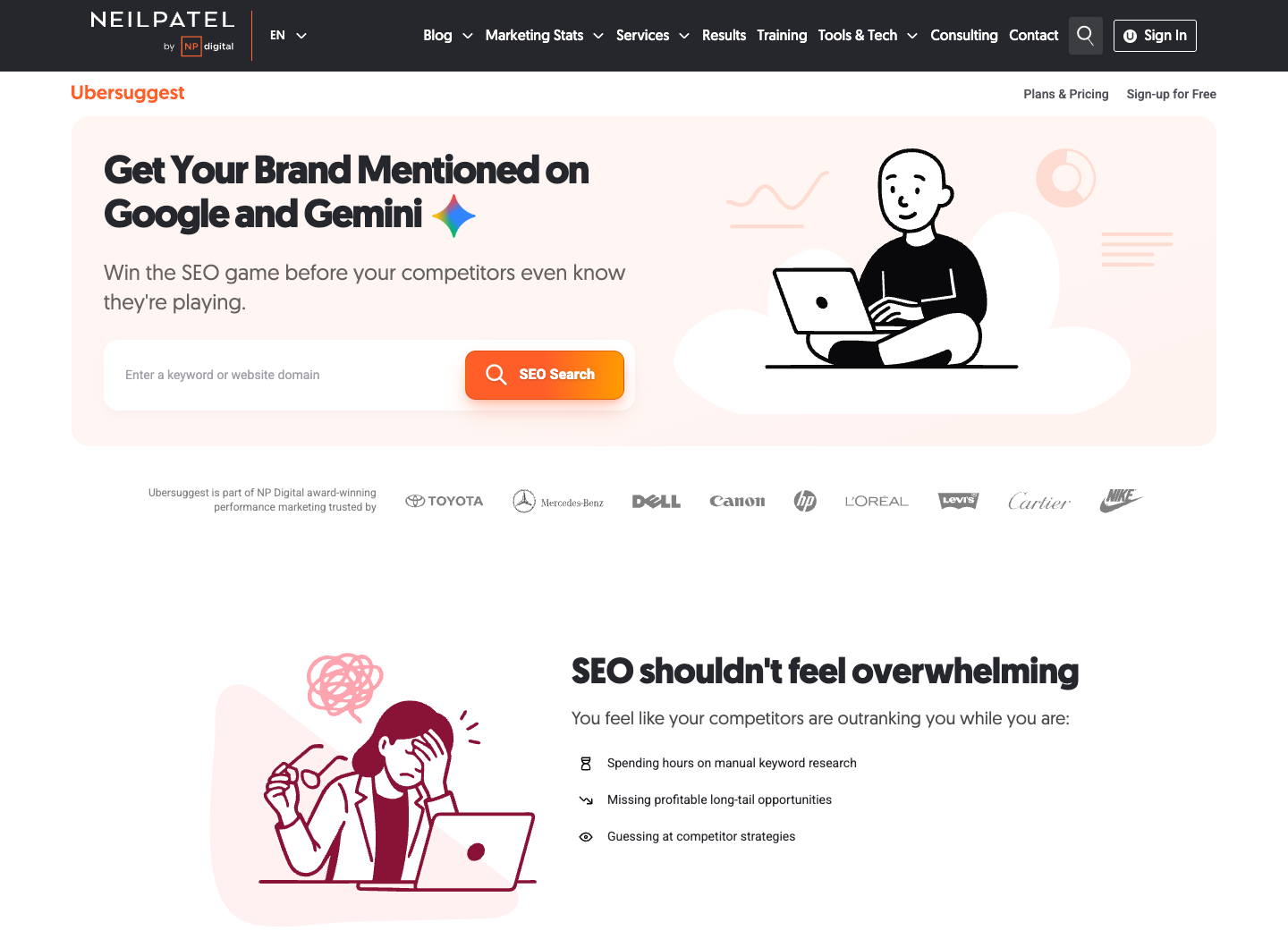
Ubersuggest is one of the easiest low-cost SEO tools for beginners because it puts keyword research, site audits, traffic estimates, and competitor ideas in one place. It is not perfect, and no keyword tool is perfectly accurate, but it is simple enough that a non-SEO person can open it and understand what to do next.
Use Ubersuggest when you need quick keyword ideas, broad content topics, basic competitor checks, or a simple site audit. It works well for founders, bloggers, and local businesses that want a lighter SEO workflow without learning a more complex platform first.
3. Keysearch
Keysearch is a budget keyword research tool that many bloggers use because it is easier to afford than enterprise suites. The main appeal is simple: you can research keywords, compare difficulty, organize ideas, and build a content plan without paying for a heavyweight platform.
The best use case is content planning. If you publish blog posts regularly and need a cheaper way to find low-competition topics, Keysearch can be useful. The main caution is data confidence. Every keyword tool estimates search volume and difficulty differently, so do not treat any single score as absolute truth. Use it to compare ideas, not to guarantee rankings.
4. Keywords Everywhere
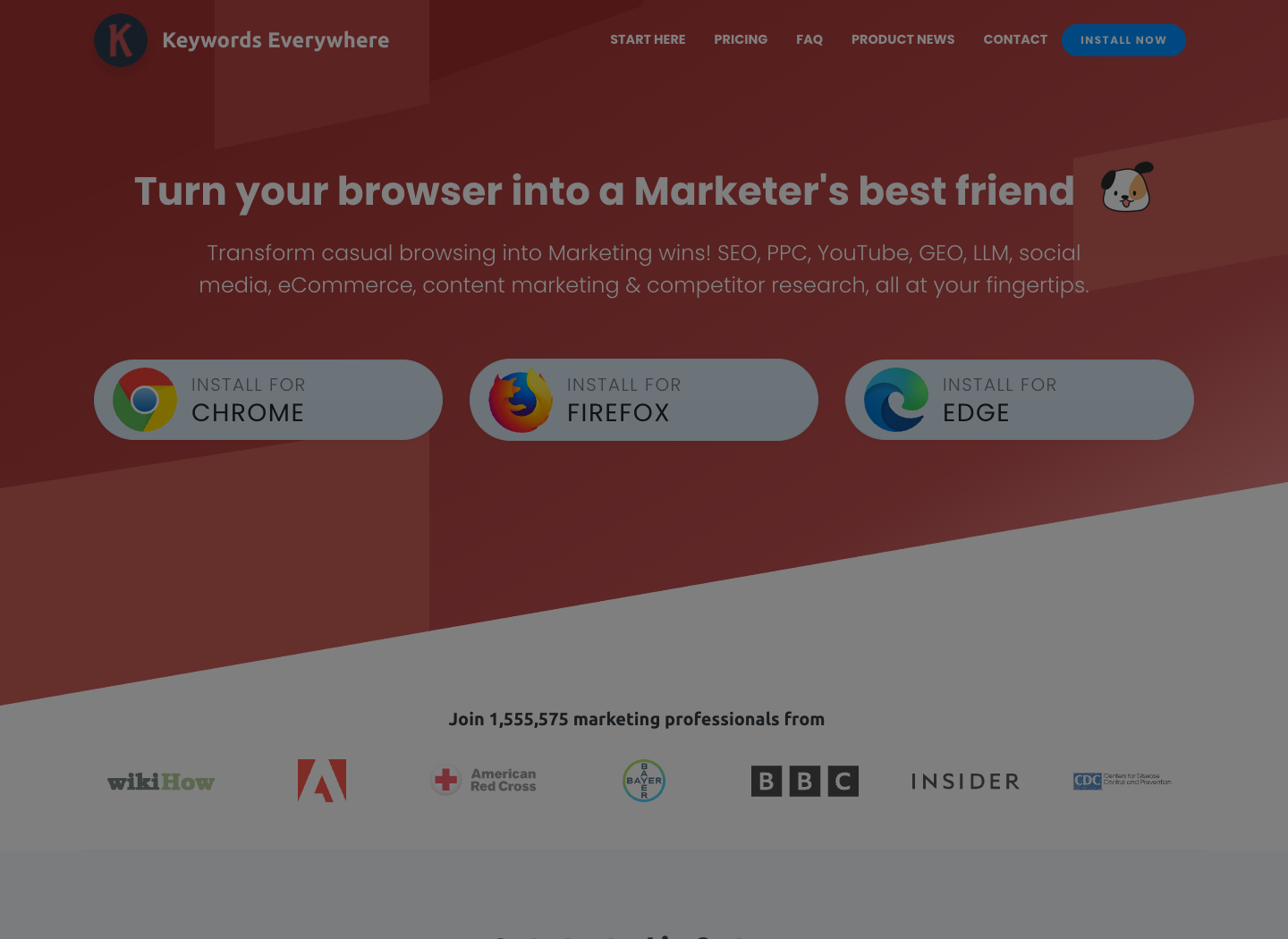
Keywords Everywhere is best when you want SEO data directly inside your browser. Instead of logging into a full platform every time, you can see keyword ideas, volume estimates, related terms, and SERP context while searching. That makes it one of the cheapest ways to speed up daily research.
It is not a full SEO suite, and it will not replace a backlink tool, rank tracker, or technical audit platform. But as a lightweight research assistant, it is hard to beat. Use it for quick validation, content ideation, YouTube or Google keyword checks, and fast SERP scanning.
5. Google Search Console
Google Search Console is free, and every website should use it. It shows real queries, real impressions, real clicks, indexing issues, page performance, and which pages are already getting traction. If you only use paid tools and ignore Search Console, you are missing the cleanest first-party SEO data available for your own site.
Use it to find pages ranking in positions 8-20, identify keywords that need a better title or stronger content section, and spot indexing problems. It is not a keyword discovery tool in the same way Ubersuggest or Keysearch is, but it is often more useful because it shows what Google already associates with your pages.
6. Google Keyword Planner
Google Keyword Planner is free inside Google Ads, and it can still be useful for broad keyword research. The downside is that it was built for advertisers, not organic SEO, so the data can feel broad or PPC-focused. Still, it is a solid starting point if you need keyword groups, commercial intent clues, or rough demand estimates.
7. Screaming Frog SEO Spider
Screaming Frog is one of the best technical SEO tools for the money because the free version can crawl smaller sites and reveal issues like missing titles, duplicate headings, redirect chains, broken pages, and indexability problems. It has a learning curve, but it is extremely useful once you understand the basics.
Use it when your site has technical problems, thin metadata, crawl errors, or messy redirects. It is not a content ideation tool. It is a site health tool, and that is exactly why it belongs in a cheap SEO stack.
8. LowFruits
LowFruits is built around finding low-competition keywords and weak spots in the SERP. That makes it helpful for newer sites that cannot compete for broad, high-authority keywords yet. Instead of chasing the biggest keyword, it helps you find topics where weaker pages are already ranking.
Use LowFruits if your strategy is long-tail content. It pairs well with Search Console because you can find opportunities externally, publish content, and then monitor real impressions and clicks over time.
9. Mangools
Mangools is a budget-friendly SEO suite that includes keyword research, SERP analysis, rank tracking, backlink checks, and site profiling. It is less intimidating than many enterprise tools, which makes it a good middle ground between a single-purpose keyword tool and a full SEO platform.
Use it if you want a clean interface and several SEO features in one place. It is a good option for bloggers, small agencies, and local businesses that want more than a browser extension but do not need the deepest enterprise data.
10. Semrush Free Tools
Semrush is not usually what people mean by cheap SEO software, but its free tools and limited free access can still be useful. It is strong for competitor research, keyword snapshots, and checking whether your data roughly matches another major SEO database. The paid plans can get expensive, so it is best used carefully if budget is the priority.
Use the free version when you need a second opinion on a keyword, domain, or competitor. If SEO is a major revenue channel, Semrush can be worth paying for later, but most beginners should not start there before they understand what they actually need.
How to Pick the Right Cheap SEO Tool
Do not buy tools because they are popular. Buy them because they remove a bottleneck. If you need backlinks, start with BacklinkManagement.io. If you need keyword ideas, use Ubersuggest, Keysearch, Keywords Everywhere, LowFruits, or Mangools. If you need real performance data, use Google Search Console. If your site is technically messy, use Screaming Frog.
The cheapest SEO stack for most small sites is simple: Google Search Console for truth, one keyword tool for ideas, one technical tool for cleanup, and one backlink solution for authority. That covers the core SEO workflow without forcing you into expensive software too early.
Bottom Line
The best cheap SEO tool depends on what problem you are solving. BacklinkManagement.io is the strongest option here if your bottleneck is link building. Ubersuggest, Keysearch, Keywords Everywhere, LowFruits, and Mangools are better for keyword research. Google Search Console and Keyword Planner are must-use free tools. Screaming Frog is the budget technical audit pick. Semrush is powerful, but its free tools make more sense for budget users than jumping straight into an expensive plan.
Start with the tool that solves your current constraint. Once that constraint changes, upgrade the stack. That is how you avoid paying for dashboards you do not need.